TL;DR: Fellow is a passion project aimed at reducing the recidivism rate in the United States by creating a rideshare for offenders.
This project began with a thorough research plan, competitive analysis, and detailed user interviews. I have applied user-flows, various user-journeys, prototype mapping, and remote user testing.
The Context
In June 2020, my husband and I were discussing the current environment around the BLM movement.
This conversation lead us into a discussion about prison reform and recidivism.
- Why is the recidivism rate in the United States so high?
- Is there anything we can do to help bring the recidivism rate down?
- Why do so many offenders fulfill the stereotype of a career criminal, if they’re not actually committing crimes?
- What services are we lacking as a nation to assist offenders as they reenter society?
Of course, there are many avenues one can take to answer to these questions. Once we dove a little deeper, we realized many offenders lack reliable transportation. This was our ‘aha moment’ and Fellow was born – a rideshare for offenders.
The Problem
The term recidivism suggests a relapse in behavior, a return to criminal offending. The three year recidivism rate in the USA is a staggering 68%. Unfortunately, there is a lack of meaningful reentry services for offenders, which often leads them right back into the system.
2.2 Million people are incarcerated in the United States right this minute.
– United States Department of Justice
Offenders who are released on probation are often required to report for community service, drug screening, substance abuse treatment, and more. Many offenders do not own a car or have a valid driver’s license. Additionally, in small, rural towns there are often no services, like Uber or public transportation, to assist these offenders in getting to their court appointments, job interviews, or work. Failure to appear at one of these court orders can result in re-arrest for violation of probation. Thus, the cycle continues.
In order to succeed, we need to create a product that:
- Obeys all laws, rules, and regulations placed on offenders
- Incredibly easy to use and was inclusive for everyone who wished to use this product
- Offered incentive for users to chose us over other rideshare services
- Humanizes offenders and gets them back on their feet
The Process
It was important for me to understand, explore, and materialize through Design Thinking.
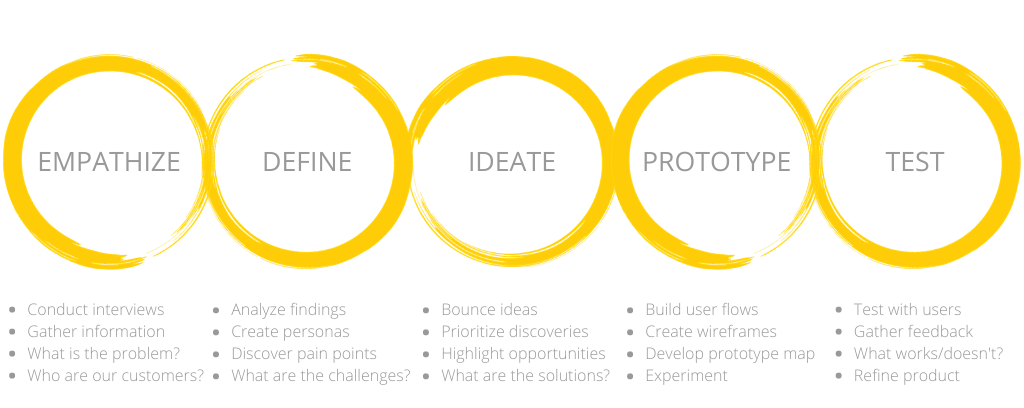
Empathize
My design process always starts here. There were a few questions that needed to be addressed from the start. First, I needed to nail down the problem to make sure I was solving the right problem. Then I needed to determine who the customers would be. From there I was able to move forward with my interviews and start gathering as much information as possible.
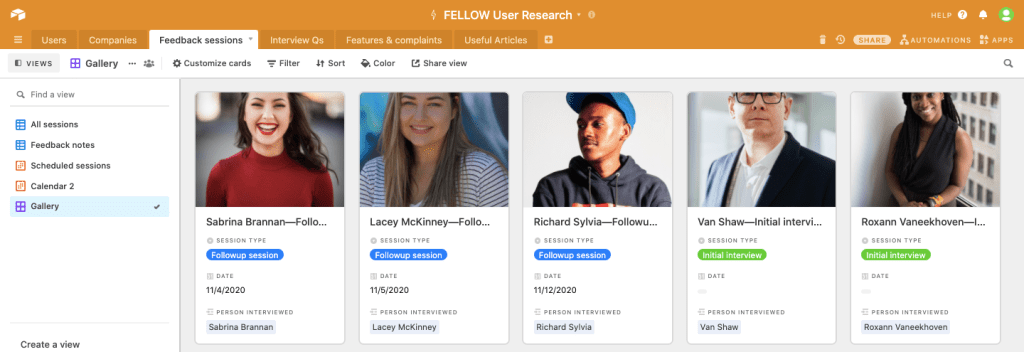
Airtable quickly became my go-to for interview recordings and organization.
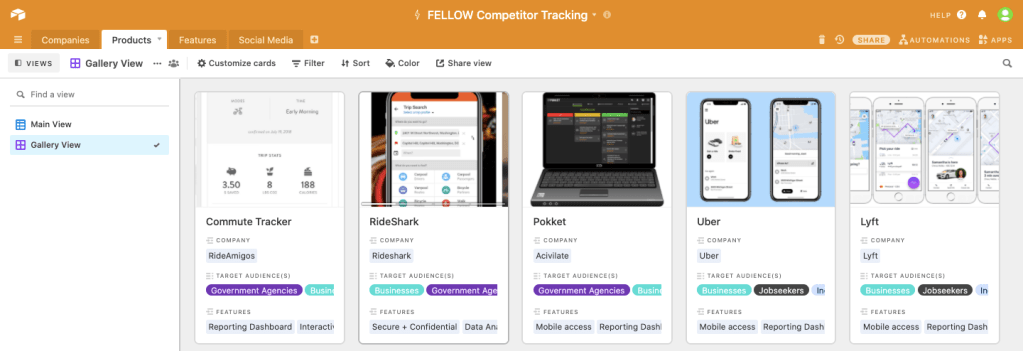
Airtable also helped me to keep my competitor tracking information in one place.
Define
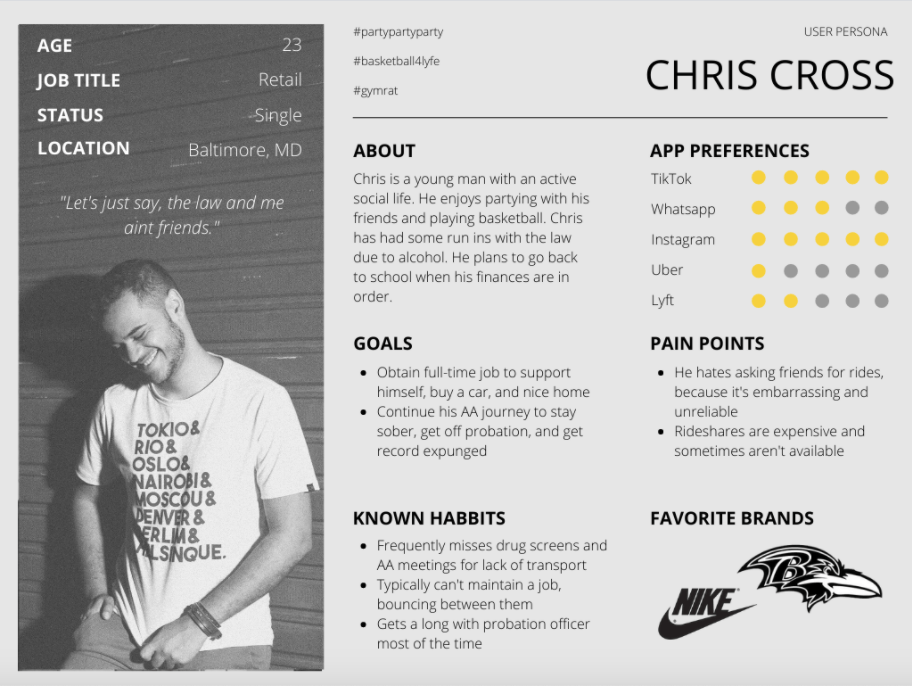
After conducting my user interviews, I was easily able to create my user personas, discover pain points and recognize any challenges that may arise along the way.
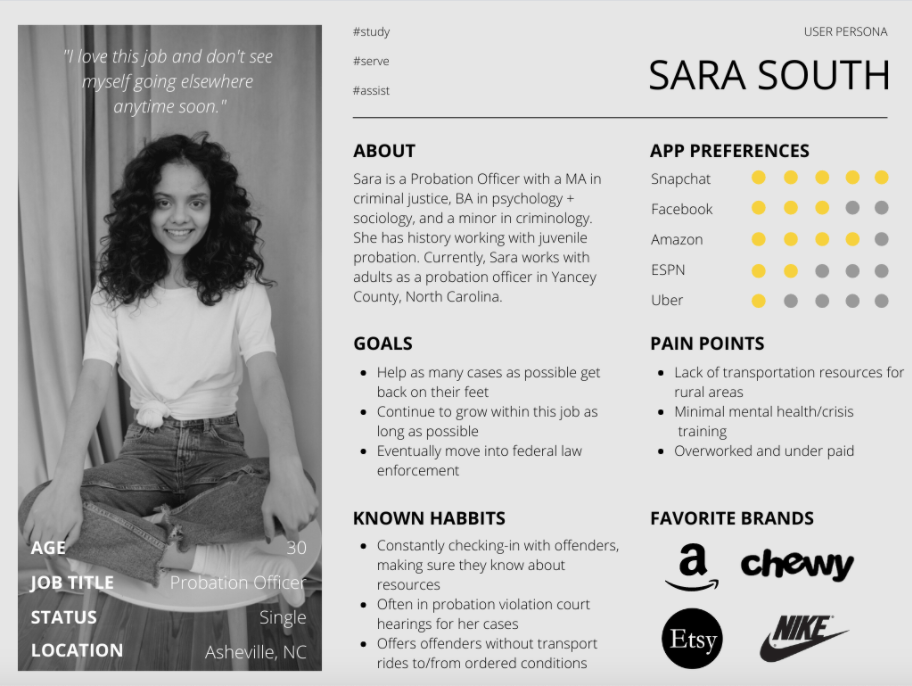
Ideate
This is where I began to prioritize my discoveries and highlight any opportunities based off my research and interviews.
Prototype
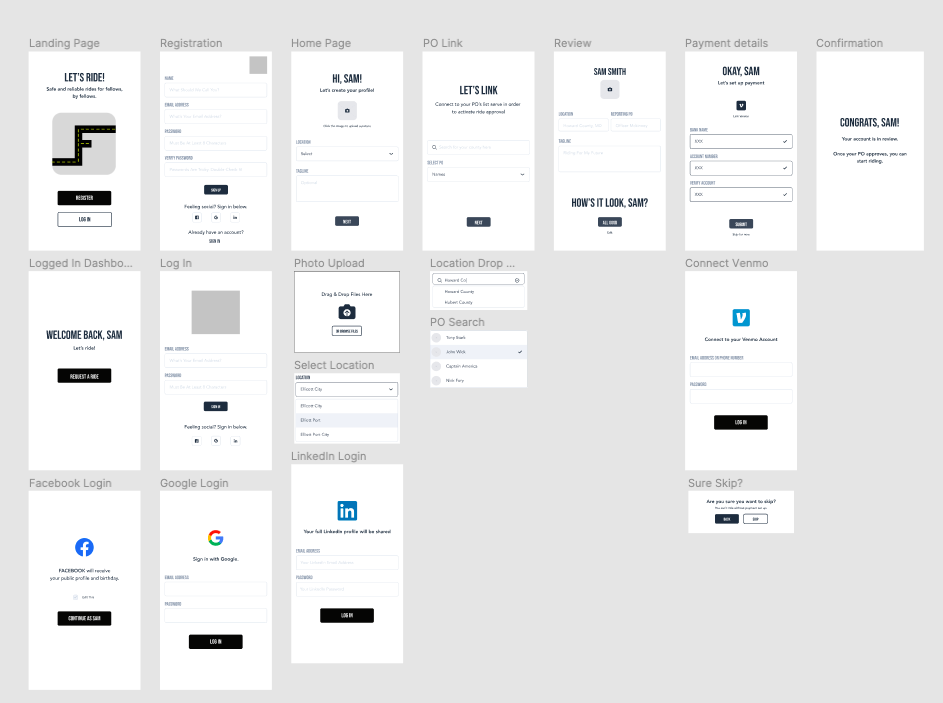
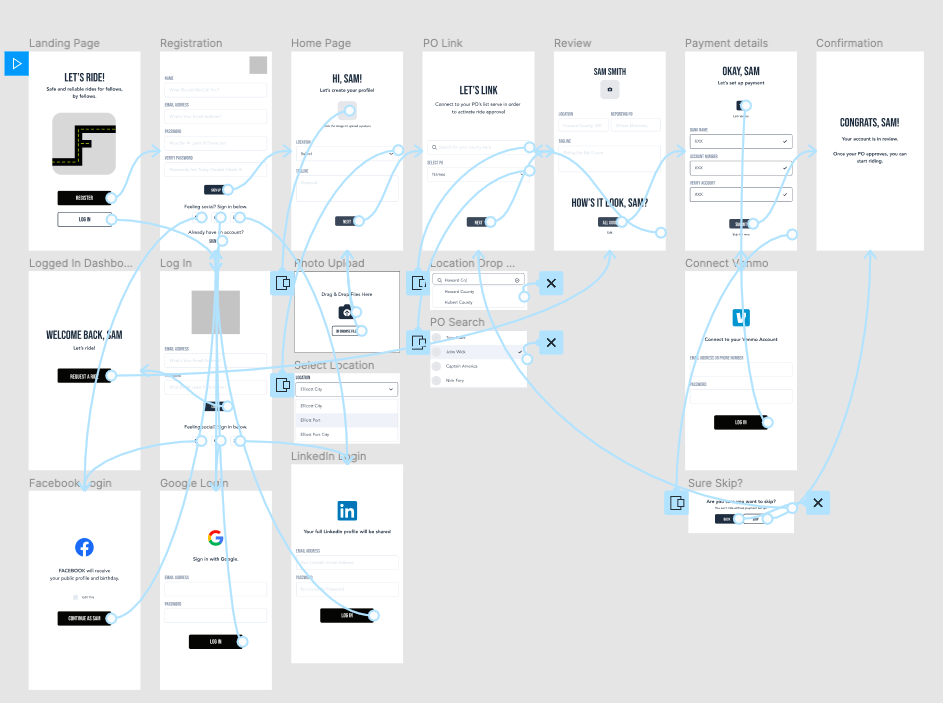
Next came the fun part! It was time to create user-flows, wireframes, and prototype. I was already very familiar with services like Uber and Lyft, so I built similar flows and a few additional flows that would be specific to Fellow.



THE RESULTS
After interviewing and doing competitive analysis research, there were some clear results and some topics that will need more research and attention.
Challenges and extra considerations include:
- Illegal activity – drugs, felons riding with other felons, etc…
- Liability of illegal activity
- Restrictions on certain offenders
- How will offenders without bank cards pay?
- Price
What research found focusing on support/benefits:
- Relief to government workers for transport
- Hold offenders more accountable
- Employment opportunity for offenders
- Reliable and empowering for offenders
- Reduction of government caseloads
Product features we want to have at this stage:
- Mobile and web access
- Multiple languages
- Safety button / 911 alert
- Reporting + interactive dashboard
- Navigation map
- Ride request
- Search
- Commute logging
- Trip planner
- Payment options
- Rewards for riding
- Profile
- Restricted zones with alerts
- Link to assigned probation officer
I believe that social services would support a service like this because it would relieve workers from having to transport parents to and from visits, appointments, etc…
– Sabrina Brannan, Child Protective Services
“I would be concerned with the small percentage of offenders committing crimes while utilizing a ride share app. It could be buying/selling drugs between rides, obtaining transportation to their victim, violating a no contact order, obtaining transportation out of state, etc. In essence using the service to facilitate a violation of their supervision.
– Lacey McKinney, Probation Officer
NEXT STEPS
There is the possibility of partnering with services like Lyft or Uber, who already offer charity ride programs. Another partnership could be Acivilate. This company bridges the gaps between corrections and community supervision, social services and community-based organizations, and makes it easier for them to help returning citizens who are determined to change their lives. Acivilate’s product, Pokket, connects justice agencies and human service providers with returning citizens to break the cycle. They do not currently offer a rideshare features. It is worth exploring with them to see if this is something that could be coupled with their existing product. Ultimately, there does seem to be a market for this service. However, there are many hoops and more research to be done in order to make this product successful.
 ERB
ERB 